•  

[Breaking News]Japan startup fails again to put lander on Moon

TOKYO, Japan, June 6 Kyodo - Takeshi Hakamada, founder and CEO of ispace Inc., suggests at a press conference in Tokyo on June 6, 2025, that the Japanese startup's lunar lander failed in its attempt to land on the Moon's surface, following its first unsuccessful try in 2023. The Tokyo-based company believes its lunar lander Resilience impacted the Moon's surface after failing to slow sufficiently during its descent, dashing ispace's hope of becoming the country's first private company to reach the lunar surface successfully. (Kyodo)

  •  
Japan ispace lunar lander fails in Moon landing

Japan ispace lunar lander fails in Moon landing

Japanese startup ispace Inc. CEO Takeshi Hakamada holds a press conference in Tokyo on June 6, 2025, after the company's lunar lander apparently crashed on the Moon, failing in its attempt to become the first private firm in Asia to touch down on it.

  •  
Japan ispace lunar lander fails in Moon landing

Japan ispace lunar lander fails in Moon landing

Japanese startup ispace Inc. CEO Takeshi Hakamada holds a press conference in Tokyo on June 6, 2025, after the company's lunar lander apparently crashed on the Moon, failing in its attempt to become the first private firm in Asia to touch down on it.

  •  
Japan ispace lunar lander fails in Moon landing

Japan ispace lunar lander fails in Moon landing

Japanese startup ispace Inc. CEO Takeshi Hakamada holds a press conference in Tokyo on June 6, 2025, after the company's lunar lander apparently crashed on the Moon, failing in its attempt to become the first private firm in Asia to touch down on it.

  •  
Japan ispace lunar lander fails in Moon landing

Japan ispace lunar lander fails in Moon landing

Japanese startup ispace Inc. CEO Takeshi Hakamada holds a press conference in Tokyo on June 6, 2025, after the company's lunar lander apparently crashed on the Moon, failing in its attempt to become the first private firm in Asia to touch down on it.

  •  
Japan startup fails again to put lander on Moon

Japan startup fails again to put lander on Moon

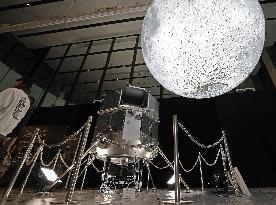
Photo taken in Tokyo on June 6, 2025, shows a mockup of a lunar lander developed by Tokyo-based startup ispace Inc. The lunar lander failed to land on the Moon's surface, following its first unsuccessful attempt in 2023, dashing ispace's hope of becoming the country's first private company to reach the lunar surface successfully.

  •  
Japan startup fails again to put lander on Moon

Japan startup fails again to put lander on Moon

Takeshi Hakamada, founder and CEO of ispace Inc., suggests at a press conference in Tokyo on June 6, 2025, that the Japanese startup's lunar lander failed in its attempt to land on the Moon's surface, following its first unsuccessful try in 2023. The Tokyo-based company believes its lunar lander Resilience impacted the Moon's surface after failing to slow sufficiently during its descent, dashing ispace's hope of becoming the country's first private company to reach the lunar surface successfully.

  •  
Japan startup fails again to put lander on Moon

Japan startup fails again to put lander on Moon

Takeshi Hakamada (C), founder and CEO of ispace Inc., suggests at a press conference in Tokyo on June 6, 2025, that the Japanese startup's lunar lander failed in its attempt to land on the Moon's surface, following its first unsuccessful try in 2023. The Tokyo-based company believes its lunar lander Resilience impacted the Moon's surface after failing to slow sufficiently during its descent, dashing ispace's hope of becoming the country's first private company to reach the lunar surface successfully.

  •  

US: SpaceX Launches 2 Falcon 9 Rockets From Florida 2

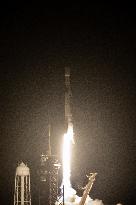
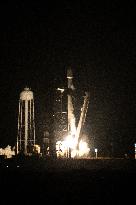
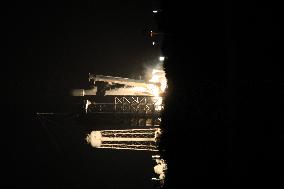
SpaceX launched two Falcon 9 rockets Wednesday, February 26. This first rocket took off at 7:16 PM from NASA’s Kennedy Space Center carrying a lunar lander built by Intuitive Machines. The second one launched from Cape Canaveral Space Force Station carrying 21 Starlink satellites.

  •  

US: SpaceX Launches 2 Falcon 9 Rockets From Florida

SpaceX launched two Falcon 9 rockets Wednesday, February 26. This first rocket took off at 7:16 PM from NASA’s Kennedy Space Center carrying a lunar lander built by Intuitive Machines. The second one launched from Cape Canaveral Space Force Station carrying 21 Starlink satellites.

  •  
SpaceX Falcon 9 Launches Intuitive Machines Nova-C Lander to the Moon

SpaceX Falcon 9 Launches Intuitive Machines Nova-C Lander to the Moon

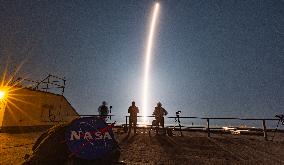
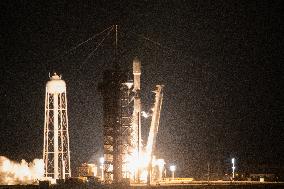
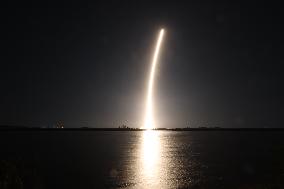
Handout photo dated February 26, 2025 shows A SpaceX Falcon 9 rocket carrying Intuitive Machines’ Nova-C lunar lander (IM-2) launches at 7:16 p.m. EST on Wednesday, Feb. 26 from Launch Complex 39A at NASA’s Kennedy Space Center in Florida as part of NASA’s CLPS (Commercial Lunar Payload Services) initiative. The IM-2 launch is carrying NASA science, technology demonstrations, and other commercial payloads to Mons Mouton, a lunar plateau to advance our understanding of the Moon and planetary processes, while paving the way for future crewed missions. Photo by Kim Shiflett/NASA via ABACAPRESS.COM

  •  
SpaceX Falcon 9 Launches Intuitive Machines Nova-C Lander to the Moon

SpaceX Falcon 9 Launches Intuitive Machines Nova-C Lander to the Moon

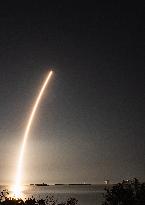
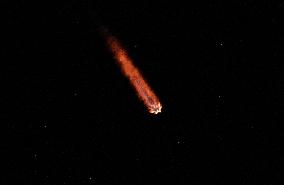
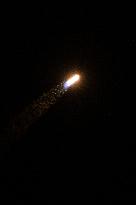
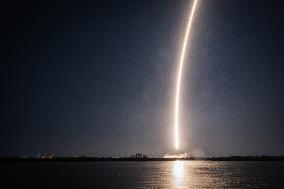
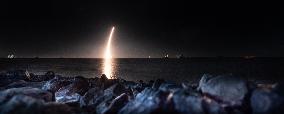
Handout photo dated February 26, 2025 shows Creating a golden streak in the night sky, a SpaceX Falcon 9 rocket carrying Intuitive Machines’ Nova-C lunar lander (IM-2) soars upward after liftoff from Launch Complex 39A at NASA’s Kennedy Space Center in Florida at 7:16 p.m. EST Wednesday, Feb. 26, 2025, as part of NASA’s CLPS (Commercial Lunar Payload Services) initiative. The IM-2 launch is carrying NASA science, technology demonstrations, and other commercial payloads to Mons Mouton, a lunar plateau to advance our understanding of the Moon and planetary processes, while paving the way for future crewed missions. Photo by Frank Michaux/NASA via ABACAPRESS.COM

  •  
SpaceX Falcon 9 Launches Intuitive Machines Nova-C Lander to the Moon

SpaceX Falcon 9 Launches Intuitive Machines Nova-C Lander to the Moon

Handout photo dated February 26, 2025 shows A SpaceX Falcon 9 rocket carrying Intuitive Machines’ Nova-C lunar lander (IM-2) launches at 7:16 p.m. EST on Wednesday, Feb. 26, 2025, from Launch Complex 39A at NASA’s Kennedy Space Center in Florida as part of NASA’s CLPS (Commercial Lunar Payload Services) initiative. The IM-2 launch is carrying NASA science, technology demonstrations, and other commercial payloads to Mons Mouton, a lunar plateau to advance our understanding of the Moon and planetary processes, while paving the way for future crewed missions. Photo by Frank Michaux/NASA via ABACAPRESS.COM

  •  
Space X Firefly Blue Ghost Mission 1

Space X Firefly Blue Ghost Mission 1

Handout photo show The Blue Ghost lander, part of NASA’s CLPS (Commercial Lunar Payload Services) initiative, lifts off atop a SpaceX Falcon 9 rocket on Wednesday, Jan. 15, 2025 from Launch Complex 39A at NASA’s Kennedy Space Center in Florida on a journey to the Moon. The Firefly Aerospace lander, carrying 10 NASA science and technology instruments, will help to further understand the Moon and help prepare for future human missions. Photo by ABACAPRESS.COM

  •  
Space X Firefly Blue Ghost Mission 1

Space X Firefly Blue Ghost Mission 1

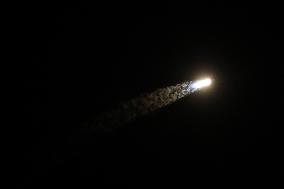
Handout photo show A SpaceX Falcon 9 rocket carrying Firefly Aerospace’s Blue Ghost Mission One is on its way to the Moon as part of NASA’s CLPS (Commercial Lunar Payload Services) initiative. The Blue Ghost lander launched from Launch Complex 39A at NASA’s Kennedy Space Center in Florida on Wednesday, Jan. 15, 2025 carrying 10 NASA science and technology instruments to the lunar surface to further understand the Moon and help prepare for future human missions. Photo by ABACAPRESS.COM

  •  
Space X Firefly Blue Ghost Mission 1

Space X Firefly Blue Ghost Mission 1

Handout photo show A SpaceX Falcon 9 rocket carrying Firefly Aerospace’s Blue Ghost Mission One is on its way to the Moon as part of NASA’s CLPS (Commercial Lunar Payload Services) initiative. The Blue Ghost lander launched from Launch Complex 39A at NASA’s Kennedy Space Center in Florida on Wednesday, Jan. 15, 2025 carrying 10 NASA science and technology instruments to the lunar surface to further understand the Moon and help prepare for future human missions. Photo by ABACAPRESS.COM

  •  
Space X Firefly Blue Ghost Mission 1

Space X Firefly Blue Ghost Mission 1

Handout photo show The Blue Ghost lander, part of NASA’s CLPS (Commercial Lunar Payload Services) initiative, lifts off atop a SpaceX Falcon 9 rocket on Wednesday, Jan. 15, 2025 from Launch Complex 39A at NASA’s Kennedy Space Center in Florida on a journey to the Moon. The Firefly Aerospace lander, carrying 10 NASA science and technology instruments, will help to further understand the Moon and help prepare for future human missions. Photo by ABACAPRESS.COM

  •  
Space X Firefly Blue Ghost Mission 1

Space X Firefly Blue Ghost Mission 1

Handout photo show Creating a golden streak in the night sky, a SpaceX Falcon 9 rocket carrying Firefly Aerospace’s Blue Ghost Mission One lander soars upward after liftoff from Launch Complex 39A at NASA’s Kennedy Space Center in Florida on Wednesday, Jan. 15, 2025 as part of NASA’s CLPS (Commercial Lunar Payload Services) initiative. The Blue Ghost lander will carry 10 NASA science and technology instruments to the lunar surface to further understand the Moon and help prepare for future human missions. Photo by ABACAPRESS.COM

  •  
Space X Firefly Blue Ghost Mission 1

Space X Firefly Blue Ghost Mission 1

Handout photo show A SpaceX Falcon 9 rocket carrying Firefly Aerospace’s Blue Ghost Mission One is on its way to the Moon as part of NASA’s CLPS (Commercial Lunar Payload Services) initiative. The Blue Ghost lander launched from Launch Complex 39A at NASA’s Kennedy Space Center in Florida on Wednesday, Jan. 15, 2025 carrying 10 NASA science and technology instruments to the lunar surface to further understand the Moon and help prepare for future human missions. Photo by ABACAPRESS.COM

  •  
Space X Firefly Blue Ghost Mission 1

Space X Firefly Blue Ghost Mission 1

Handout photo show Creating a golden streak in the night sky, a SpaceX Falcon 9 rocket carrying Firefly Aerospace’s Blue Ghost Mission One lander soars upward after liftoff from Launch Complex 39A at NASA’s Kennedy Space Center in Florida on Wednesday, Jan. 15, 2025 as part of NASA’s CLPS (Commercial Lunar Payload Services) initiative. The Blue Ghost lander will carry 10 NASA science and technology instruments to the lunar surface to further understand the Moon and help prepare for future human missions. Photo by ABACAPRESS.COM

  •  
Space X Firefly Blue Ghost Mission 1

Space X Firefly Blue Ghost Mission 1

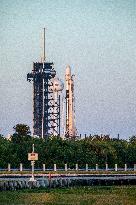
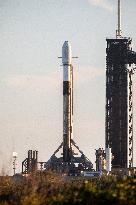
Handout photo show A SpaceX Falcon 9 rocket carrying Firefly Aerospace’s Blue Ghost Mission One lander prepares for a launch to the Moon on January 14 from Launch Complex 39A at the agency’s Kennedy Space Center in Florida as part of NASA’s CLPS (Commercial Lunar Payload Services) initiative. The Blue Ghost lander will carry 10 NASA science and technology instruments to the lunar surface to further understand the Moon and help prepare for future human missions. Liftoff is targeted for 1:11 a.m. EST. Photo by ABACAPRESS.COM

  •  
Space X Firefly Blue Ghost Mission 1

Space X Firefly Blue Ghost Mission 1

Handout photo show The Blue Ghost lander, part of NASA’s CLPS (Commercial Lunar Payload Services) initiative, lifts off atop a SpaceX Falcon 9 rocket on Wednesday, Jan. 15, 2025 from Launch Complex 39A at NASA’s Kennedy Space Center in Florida on a journey to the Moon. The Firefly Aerospace lander, carrying 10 NASA science and technology instruments, will help to further understand the Moon and help prepare for future human missions. Photo by ABACAPRESS.COM

  •  
Space X Firefly Blue Ghost Mission 1

Space X Firefly Blue Ghost Mission 1

Handout photo show Creating a golden streak in the night sky, a SpaceX Falcon 9 rocket carrying Firefly Aerospace’s Blue Ghost Mission One lander soars upward after liftoff from Launch Complex 39A at NASA’s Kennedy Space Center in Florida on Wednesday, Jan. 15, 2025 as part of NASA’s CLPS (Commercial Lunar Payload Services) initiative. The Blue Ghost lander will carry 10 NASA science and technology instruments to the lunar surface to further understand the Moon and help prepare for future human missions. Photo by ABACAPRESS.COM

  •  
Space X Firefly Blue Ghost Mission 1

Space X Firefly Blue Ghost Mission 1

Handout photo show A SpaceX Falcon 9 rocket carrying Firefly Aerospace’s Blue Ghost Mission One lander prepares for a launch to the Moon on January 14 from Launch Complex 39A at the agency’s Kennedy Space Center in Florida as part of NASA’s CLPS (Commercial Lunar Payload Services) initiative. The Blue Ghost lander will carry 10 NASA science and technology instruments to the lunar surface to further understand the Moon and help prepare for future human missions. Liftoff is targeted for 1:11 a.m. EST. Photo by ABACAPRESS.COM

  •  
NASA Selects SpaceX for Dragonfly Mission to Titan

NASA Selects SpaceX for Dragonfly Mission to Titan

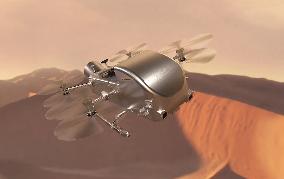
Handout photo dated 2024 shows Artist’s concept of Dragonfly soaring over the dunes of Saturn’s moon Titan. NASA has selected SpaceX to provide launch services for the Dragonfly mission, a rotorcraft lander mission under NASA’s New Frontiers Program, designed to explore Saturn’s moon Titan. The mission will sample materials and determine surface composition in different geologic settings, advancing our search for the building blocks of life. The firm-fixed-price contract has a value of approximately $256.6 million, which includes launch services and other mission related costs. The Dragonfly mission currently has a targeted launch period from July 5, 2028, to July 25, 2028, on a SpaceX Falcon Heavy rocket from Launch Complex 39A at NASA’s Kennedy Space Center in Florida. Dragonfly centers on novel approach to planetary exploration, employing a rotorcraft-lander to travel between and sample diverse sites on Saturn’s largest moon. With contributions from partners around the globe, Dragonfly’s scientific payload

  •  

China's Chang'e-6 brings back first samples from moon's far side to Earth

STORY: China's Chang'e-6 brings back first samples from moon's far side to Earth SHOOTING TIME: June 25, 2024 DATELINE: June 25, 2024 LENGTH: 00:00:51 LOCATION: HOHHOT, China CATEGORY: TECHNOLOGY SHOTLIST: 1. various of the site STORYLINE: The returner of the Chang'e-6 probe touched down on Earth on Tuesday, bringing back the world's first samples collected from the moon's far side. The return capsule landed precisely in the designated area in Siziwang Banner, north China's Inner Mongolia Autonomous Region, and the mission is a complete success, according to the China National Space Administration (CNSA). Chang'e-6 is one of the most complex and challenging missions in China's space exploration efforts to date. Consisting of an orbiter, a returner, a lander and an ascender, it was launched on May 3 this year, and has gone through various stages such as Earth-moon transfer, near-moon braking, lunar orbiting and separation of the lander-ascender combination and the orbiter-returner combination. S

  •  
XINHUA PHOTOS OF THE DAY

XINHUA PHOTOS OF THE DAY

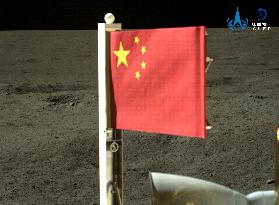
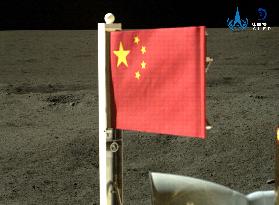
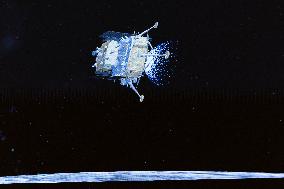
(240605) -- BEIJING, June 5, 2024 Photo by Xinhua/ABACAPRESS.COM) -- A Chinese national flag carried by the lander of Chang'e-6 probe unfurls at the moon's far side, June 4, 2024. The ascender of China's Chang'e-6 probe lifted off from lunar surface on Tuesday morning, carrying samples collected from the moon's far side, an unprecedented feat in human lunar exploration history. The ascender has entered a preset orbit around the moon, said the China National Space Administration (CNSA). (CNSA/Handout via Xinhua/ABACAPRESS.COM

  •  
(EyesonSci)CHINA-CHANG'E-6-LUNAR SURFACE IMAGES (CN)

(EyesonSci)CHINA-CHANG'E-6-LUNAR SURFACE IMAGES (CN)

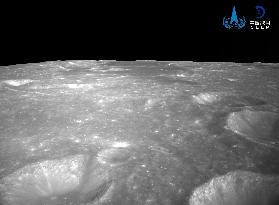
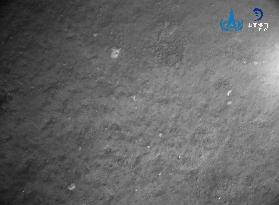
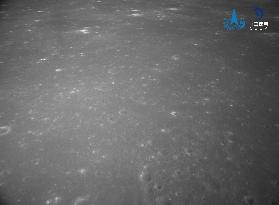
(240604) -- BEIJING, June 4, 2024 Photo by Xinhua/ABACAPRESS.COM) -- This image released by the China National Space Administration (CNSA) on June 4, 2024, which was taken with the landing camera on the lander of Chang'e-6 probe, shows a view of the lunar surface. The ascender of China's Chang'e-6 probe lifted off from lunar surface on Tuesday morning, carrying samples collected from the moon's far side, an unprecedented feat in human lunar exploration history. The ascender has entered a preset orbit around the moon, said the China National Space Administration (CNSA). (CNSA/Handout via Xinhua/ABACAPRESS.COM

  •  
(EyesonSci)CHINA-CHANG'E-6-LUNAR SURFACE IMAGES (CN)

(EyesonSci)CHINA-CHANG'E-6-LUNAR SURFACE IMAGES (CN)

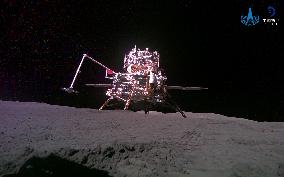
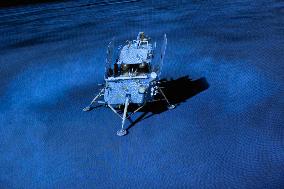
(240604) -- BEIJING, June 4, 2024 Photo by Xinhua/ABACAPRESS.COM) -- This photo taken and beamed back to Earth autonomously by a mini rover released from the lander-ascender combination of Chang'e-6 probe shows a view of the combination itself on the lunar surface, June 3, 2024. The ascender of China's Chang'e-6 probe lifted off from lunar surface on Tuesday morning, carrying samples collected from the moon's far side, an unprecedented feat in human lunar exploration history. The ascender has entered a preset orbit around the moon, said the China National Space Administration (CNSA). (CNSA/Handout via Xinhua/ABACAPRESS.COM

  •  
(EyesonSci)CHINA-CHANG'E-6-LUNAR SURFACE IMAGES (CN)

(EyesonSci)CHINA-CHANG'E-6-LUNAR SURFACE IMAGES (CN)

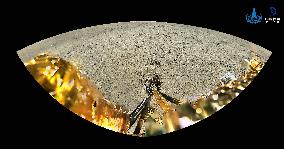
(240604) -- BEIJING, June 4, 2024 Photo by Xinhua/ABACAPRESS.COM) -- This stitched panoramic image released by the China National Space Administration (CNSA) on June 4, 2024, which was taken with the panoramic camera on the lander of Chang'e-6 probe, shows a view of the lunar surface. The ascender of China's Chang'e-6 probe lifted off from lunar surface on Tuesday morning, carrying samples collected from the moon's far side, an unprecedented feat in human lunar exploration history. The ascender has entered a preset orbit around the moon, said the China National Space Administration (CNSA). (CNSA/Handout via Xinhua/ABACAPRESS.COM

  •  
(EyesonSci)CHINA-CHANG'E-6-LUNAR SURFACE IMAGES (CN)

(EyesonSci)CHINA-CHANG'E-6-LUNAR SURFACE IMAGES (CN)

(240604) -- BEIJING, June 4, 2024 Photo by Xinhua/ABACAPRESS.COM) -- This image released by the China National Space Administration (CNSA) on June 4, 2024, which was taken with the landing camera on the lander of Chang'e-6 probe, shows a view of the lunar surface. The ascender of China's Chang'e-6 probe lifted off from lunar surface on Tuesday morning, carrying samples collected from the moon's far side, an unprecedented feat in human lunar exploration history. The ascender has entered a preset orbit around the moon, said the China National Space Administration (CNSA). (CNSA/Handout via Xinhua/ABACAPRESS.COM

  •  
(EyesonSci)CHINA-CHANG'E-6-LUNAR SURFACE IMAGES (CN)

(EyesonSci)CHINA-CHANG'E-6-LUNAR SURFACE IMAGES (CN)

(240604) -- BEIJING, June 4, 2024 Photo by Xinhua/ABACAPRESS.COM) -- This image released by the China National Space Administration (CNSA) on June 4, 2024, which was taken with the landing camera on the lander of Chang'e-6 probe, shows a view of the lunar surface. The ascender of China's Chang'e-6 probe lifted off from lunar surface on Tuesday morning, carrying samples collected from the moon's far side, an unprecedented feat in human lunar exploration history. The ascender has entered a preset orbit around the moon, said the China National Space Administration (CNSA). (CNSA/Handout via Xinhua/ABACAPRESS.COM

  •  
(EyesonSci)CHINA-CHANG'E-6-MOON-FAR SIDE-ASCENDER-LIFT-OFF (CN)

(EyesonSci)CHINA-CHANG'E-6-MOON-FAR SIDE-ASCENDER-LIFT-OFF (CN)

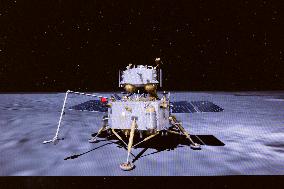
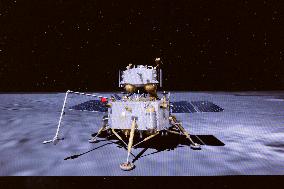
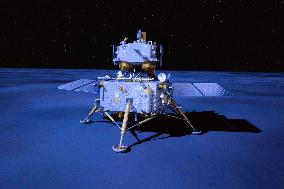
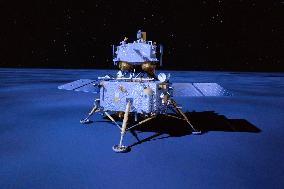
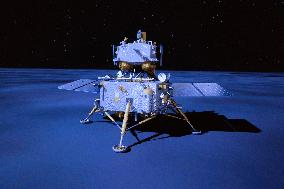
(240604) -- BEIJING, June 4, 2024 Photo by Xinhua/ABACAPRESS.COM) -- This image taken from video animation at Beijing Aerospace Control Center (BACC) on June 4, 2024 shows the lander-ascender combination of Chang'e-6 probe waiting to lift off from lunar surface. A Chinese national flag carried by the lander is seen unfurled at the moon's far side. The ascender of China's Chang'e-6 probe lifted off from lunar surface on Tuesday morning, carrying samples collected from the moon's far side, an unprecedented feat in human lunar exploration history. The ascender has entered a preset orbit around the moon, said the China National Space Administration (CNSA). Photo by Xinhua/ABACAPRESS.COM/Jin Liwang)

  •  
(EyesonSci)CHINA-CHANG'E-6-MOON-FAR SIDE-ASCENDER-LIFT-OFF (CN)

(EyesonSci)CHINA-CHANG'E-6-MOON-FAR SIDE-ASCENDER-LIFT-OFF (CN)

(240604) -- BEIJING, June 4, 2024 (Xinhua) -- This image taken from video animation at Beijing Aerospace Control Center (BACC) on June 4, 2024 shows the lander-ascender combination of Chang'e-6 probe waiting to lift off from lunar surface. A Chinese national flag carried by the lander is seen unfurled at the moon's far side. The ascender of China's Chang'e-6 probe lifted off from lunar surface on Tuesday morning, carrying samples collected from the moon's far side, an unprecedented feat in human lunar exploration history. The ascender has entered a preset orbit around the moon, said the China National Space Administration (CNSA). (Xinhua/Jin Liwang)

  •  
(EyesonSci)CHINA-CHANG'E-6-MOON-FAR SIDE-ASCENDER-LIFT-OFF (CN)

(EyesonSci)CHINA-CHANG'E-6-MOON-FAR SIDE-ASCENDER-LIFT-OFF (CN)

(240604) -- BEIJING, June 4, 2024 Photo by Xinhua/ABACAPRESS.COM) -- A Chinese national flag carried by the lander of Chang'e-6 probe unfurls at the moon's far side, June 4, 2024. The ascender of China's Chang'e-6 probe lifted off from lunar surface on Tuesday morning, carrying samples collected from the moon's far side, an unprecedented feat in human lunar exploration history. The ascender has entered a preset orbit around the moon, said the China National Space Administration (CNSA). (CNSA/Handout via Xinhua/ABACAPRESS.COM

  •  

China's spacecraft takes off from moon with first samples from lunar far side

STORY: China's spacecraft takes off from moon with first samples from lunar far side SHOOTING TIME: June 4, 2024 & File DATELINE: June 4, 2024 LENGTH: 00:01:31 LOCATION: Beijing CATEGORY: TECHNOLOGY SHOTLIST: 1. photos of the video animation of the ascender of Chang'e-6 probe carrying samples collected from the moon's far side, lifting off from lunar surface, taken from Beijing Aerospace Control Center (BACC) on June 4, 2024 2. various of Chang'e-6 probe sampling on the moon, June 4, 2024 3. file footages of a Long March-5 rocket, carrying the Chang'e-6 spacecraft, launching at the Wenchang Space Launch Site in south China's Hainan Province, May 3, 2024. 4. camera on the lander-ascender combination of Chang'e-6 showing its landing in the South Pole-Aitken (SPA) Basin on the far side of the moon on June 2, 2024 5. various of Chang'e-6 probe sampling on the moon, June 4, 2024 STORYLINE: The ascender of China's Chang'e-6 probe lifted off from lunar surface on Tuesday morning, carrying samples collected from t

  •  

China's Chang'e-6 lands on moon's far side to collect samples

STORY: China's Chang'e-6 lands on moon's far side to collect samples SHOOTING TIME: June 2, 2024 DATELINE: June 2, 2024 LENGTH: 00:01:02 LOCATION: Beijing CATEGORY: TECHNOLOGY/SCIENCE SHOTLIST: 1. footage of Chang'e-6 touching down on the far side of the moon 2. launching of Chang'e-6 on May 3 STORYLINE: China's Chang'e-6 touched down on the far side of the moon on Sunday morning, and will collect samples from this rarely explored terrain for the first time in human history, the China National Space Administration (CNSA) announced. Supported by the Queqiao-2 relay satellite, the lander-ascender combination of the Chang'e-6 probe successfully landed at the designated landing area at 6:23 a.m. (Beijing Time) in the South Pole-Aitken (SPA) Basin. Chang'e-6 consists of an orbiter, a returner, a lander and an ascender. Since its launch on May 3 this year, it has gone through various stages such as Earth-moon transfer, near-moon braking, lunar orbiting and landing descent. The CNSA said the lander-asce

  •  
(EyesonSci)CHINA-CHANG'E-6-MOON-FAR SIDE-LANDING (CN)

(EyesonSci)CHINA-CHANG'E-6-MOON-FAR SIDE-LANDING (CN)

(240602) -- BEIJING, June 2, 2024 Photo by Xinhua/ABACAPRESS.COM) -- Technical personnel work at the Beijing Aerospace Control Center (BACC) in Beijing, capital of China, June 2, 2024. China's Chang'e-6 touched down on the far side of the moon on Sunday morning, and will collect samples from this rarely explored terrain for the first time in human history, the China National Space Administration (CNSA) announced. Supported by the Queqiao-2 relay satellite, the lander-ascender combination of the Chang'e-6 probe successfully landed at the designated landing area at 6:23 a.m. (Beijing Time) in the South Pole-Aitken (SPA) Basin. Photo by Xinhua/ABACAPRESS.COM/Jin Liwang)

  •  
XINHUA PHOTOS OF THE DAY

XINHUA PHOTOS OF THE DAY

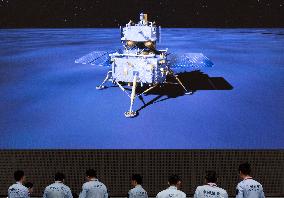
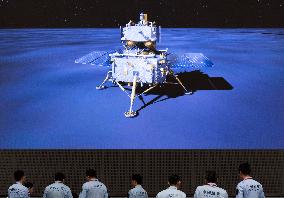
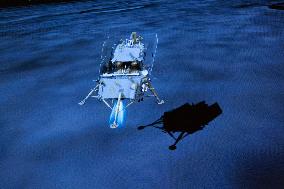
(240602) -- BEIJING, June 2, 2024 Photo by Xinhua/ABACAPRESS.COM) -- This image taken from video animation at Beijing Aerospace Control Center (BACC) on June 2, 2024 shows the lander-ascender combination of Chang'e-6 probe landing on the far side of the moon. China's Chang'e-6 touched down on the far side of the moon on Sunday morning, and will collect samples from this rarely explored terrain for the first time in human history, the China National Space Administration (CNSA) announced. Supported by the Queqiao-2 relay satellite, the lander-ascender combination of the Chang'e-6 probe successfully landed at the designated landing area at 6:23 a.m. (Beijing Time) in the South Pole-Aitken (SPA) Basin. Photo by Xinhua/ABACAPRESS.COM/Jin Liwang)

  •  
(EyesonSci)CHINA-CHANG'E-6-MOON-FAR SIDE-LANDING (CN)

(EyesonSci)CHINA-CHANG'E-6-MOON-FAR SIDE-LANDING (CN)

(240602) -- BEIJING, June 2, 2024 (Xinhua) -- Technical personnel work at the Beijing Aerospace Control Center (BACC) in Beijing, capital of China, June 2, 2024. China's Chang'e-6 touched down on the far side of the moon on Sunday morning, and will collect samples from this rarely explored terrain for the first time in human history, the China National Space Administration (CNSA) announced. Supported by the Queqiao-2 relay satellite, the lander-ascender combination of the Chang'e-6 probe successfully landed at the designated landing area at 6:23 a.m. (Beijing Time) in the South Pole-Aitken (SPA) Basin. (Xinhua/Jin Liwang)

  •  
XINHUA PHOTOS OF THE DAY

XINHUA PHOTOS OF THE DAY

(240602) -- BEIJING, June 2, 2024 (Xinhua) -- This image taken from video animation at Beijing Aerospace Control Center (BACC) on June 2, 2024 shows the lander-ascender combination of Chang'e-6 probe landing on the far side of the moon. China's Chang'e-6 touched down on the far side of the moon on Sunday morning, and will collect samples from this rarely explored terrain for the first time in human history, the China National Space Administration (CNSA) announced. Supported by the Queqiao-2 relay satellite, the lander-ascender combination of the Chang'e-6 probe successfully landed at the designated landing area at 6:23 a.m. (Beijing Time) in the South Pole-Aitken (SPA) Basin. (Xinhua/Jin Liwang)

  •  
(EyesonSci)CHINA-CHANG'E-6-MOON-FAR SIDE-LANDING (CN)

(EyesonSci)CHINA-CHANG'E-6-MOON-FAR SIDE-LANDING (CN)

(240602) -- BEIJING, June 2, 2024 Photo by Xinhua/ABACAPRESS.COM) -- Technical personnel view data sent back by the lander-ascender combination of Chang'e-6 probe at the Beijing Aerospace Control Center (BACC) in Beijing, capital of China, June 2, 2024. China's Chang'e-6 touched down on the far side of the moon on Sunday morning, and will collect samples from this rarely explored terrain for the first time in human history, the China National Space Administration (CNSA) announced. Supported by the Queqiao-2 relay satellite, the lander-ascender combination of the Chang'e-6 probe successfully landed at the designated landing area at 6:23 a.m. (Beijing Time) in the South Pole-Aitken (SPA) Basin. Photo by Xinhua/ABACAPRESS.COM/Jin Liwang)

  •  
(EyesonSci)CHINA-CHANG'E-6-MOON-FAR SIDE-LANDING (CN)

(EyesonSci)CHINA-CHANG'E-6-MOON-FAR SIDE-LANDING (CN)

(240602) -- BEIJING, June 2, 2024 (Xinhua) -- Technical personnel view data sent back by the lander-ascender combination of Chang'e-6 probe at the Beijing Aerospace Control Center (BACC) in Beijing, capital of China, June 2, 2024. China's Chang'e-6 touched down on the far side of the moon on Sunday morning, and will collect samples from this rarely explored terrain for the first time in human history, the China National Space Administration (CNSA) announced. Supported by the Queqiao-2 relay satellite, the lander-ascender combination of the Chang'e-6 probe successfully landed at the designated landing area at 6:23 a.m. (Beijing Time) in the South Pole-Aitken (SPA) Basin. (Xinhua/Jin Liwang)

  •  
(EyesonSci)CHINA-CHANG'E-6-MOON-FAR SIDE-LANDING (CN)

(EyesonSci)CHINA-CHANG'E-6-MOON-FAR SIDE-LANDING (CN)

(240602) -- BEIJING, June 2, 2024 Photo by Xinhua/ABACAPRESS.COM) -- This image taken from video animation at Beijing Aerospace Control Center (BACC) on June 2, 2024 shows the lander-ascender combination of Chang'e-6 probe landing on the far side of the moon. China's Chang'e-6 touched down on the far side of the moon on Sunday morning, and will collect samples from this rarely explored terrain for the first time in human history, the China National Space Administration (CNSA) announced. Supported by the Queqiao-2 relay satellite, the lander-ascender combination of the Chang'e-6 probe successfully landed at the designated landing area at 6:23 a.m. (Beijing Time) in the South Pole-Aitken (SPA) Basin. Photo by Xinhua/ABACAPRESS.COM/Jin Liwang)

  •  
(EyesonSci)CHINA-CHANG'E-6-MOON-FAR SIDE-LANDING (CN)

(EyesonSci)CHINA-CHANG'E-6-MOON-FAR SIDE-LANDING (CN)

(240602) -- BEIJING, June 2, 2024 Photo by Xinhua/ABACAPRESS.COM) -- This image taken from video animation at Beijing Aerospace Control Center (BACC) on June 2, 2024 shows the lander-ascender combination of Chang'e-6 probe landing on the far side of the moon. China's Chang'e-6 touched down on the far side of the moon on Sunday morning, and will collect samples from this rarely explored terrain for the first time in human history, the China National Space Administration (CNSA) announced. Supported by the Queqiao-2 relay satellite, the lander-ascender combination of the Chang'e-6 probe successfully landed at the designated landing area at 6:23 a.m. (Beijing Time) in the South Pole-Aitken (SPA) Basin. Photo by Xinhua/ABACAPRESS.COM/Jin Liwang)

  •  
(EyesonSci)CHINA-CHANG'E-6-MOON-FAR SIDE-LANDING (CN)

(EyesonSci)CHINA-CHANG'E-6-MOON-FAR SIDE-LANDING (CN)

(240602) -- BEIJING, June 2, 2024 Photo by Xinhua/ABACAPRESS.COM) -- This image taken from video animation at Beijing Aerospace Control Center (BACC) on June 2, 2024 shows the lander-ascender combination of Chang'e-6 probe landing on the far side of the moon. China's Chang'e-6 touched down on the far side of the moon on Sunday morning, and will collect samples from this rarely explored terrain for the first time in human history, the China National Space Administration (CNSA) announced. Supported by the Queqiao-2 relay satellite, the lander-ascender combination of the Chang'e-6 probe successfully landed at the designated landing area at 6:23 a.m. (Beijing Time) in the South Pole-Aitken (SPA) Basin. Photo by Xinhua/ABACAPRESS.COM/Jin Liwang)

  •  
(EyesonSci)CHINA-CHANG'E-6-MOON-FAR SIDE-LANDING (CN)

(EyesonSci)CHINA-CHANG'E-6-MOON-FAR SIDE-LANDING (CN)

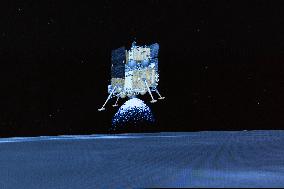
(240602) -- BEIJING, June 2, 2024 Photo by Xinhua/ABACAPRESS.COM) -- This image taken from video animation at Beijing Aerospace Control Center (BACC) on June 2, 2024 shows the lander-ascender combination of Chang'e-6 probe before landing on the far side of the moon. China's Chang'e-6 touched down on the far side of the moon on Sunday morning, and will collect samples from this rarely explored terrain for the first time in human history, the China National Space Administration (CNSA) announced. Supported by the Queqiao-2 relay satellite, the lander-ascender combination of the Chang'e-6 probe successfully landed at the designated landing area at 6:23 a.m. (Beijing Time) in the South Pole-Aitken (SPA) Basin. Photo by Xinhua/ABACAPRESS.COM/Jin Liwang)

  •  
(EyesonSci)CHINA-CHANG'E-6-MOON-FAR SIDE-LANDING (CN)

(EyesonSci)CHINA-CHANG'E-6-MOON-FAR SIDE-LANDING (CN)

(240602) -- BEIJING, June 2, 2024 Photo by Xinhua/ABACAPRESS.COM) -- Technical personnel work at the Beijing Aerospace Control Center (BACC) in Beijing, capital of China, June 2, 2024. China's Chang'e-6 touched down on the far side of the moon on Sunday morning, and will collect samples from this rarely explored terrain for the first time in human history, the China National Space Administration (CNSA) announced. Supported by the Queqiao-2 relay satellite, the lander-ascender combination of the Chang'e-6 probe successfully landed at the designated landing area at 6:23 a.m. (Beijing Time) in the South Pole-Aitken (SPA) Basin. Photo by Xinhua/ABACAPRESS.COM/Jin Liwang)

  •  
(EyesonSci)CHINA-CHANG'E-6-MOON-FAR SIDE-LANDING (CN)

(EyesonSci)CHINA-CHANG'E-6-MOON-FAR SIDE-LANDING (CN)

(240602) -- BEIJING, June 2, 2024 Photo by Xinhua/ABACAPRESS.COM) -- Technical personnel work at the Beijing Aerospace Control Center (BACC) in Beijing, capital of China, June 2, 2024. China's Chang'e-6 touched down on the far side of the moon on Sunday morning, and will collect samples from this rarely explored terrain for the first time in human history, the China National Space Administration (CNSA) announced. Supported by the Queqiao-2 relay satellite, the lander-ascender combination of the Chang'e-6 probe successfully landed at the designated landing area at 6:23 a.m. (Beijing Time) in the South Pole-Aitken (SPA) Basin. Photo by Xinhua/ABACAPRESS.COM/Jin Liwang)

  •  
(EyesonSci)CHINA-CHANG'E-6-MOON-FAR SIDE-LANDING (CN)

(EyesonSci)CHINA-CHANG'E-6-MOON-FAR SIDE-LANDING (CN)

(240602) -- BEIJING, June 2, 2024 Photo by Xinhua/ABACAPRESS.COM) -- This image taken from video animation at Beijing Aerospace Control Center (BACC) on June 2, 2024 shows the lander-ascender combination of Chang'e-6 probe before landing on the far side of the moon. China's Chang'e-6 touched down on the far side of the moon on Sunday morning, and will collect samples from this rarely explored terrain for the first time in human history, the China National Space Administration (CNSA) announced. Supported by the Queqiao-2 relay satellite, the lander-ascender combination of the Chang'e-6 probe successfully landed at the designated landing area at 6:23 a.m. (Beijing Time) in the South Pole-Aitken (SPA) Basin. Photo by Xinhua/ABACAPRESS.COM/Jin Liwang)

  • Main
  • Top
  • Editorial
  • Creative
  • About Us
  • About ILG
  • Terms of use
  • Company
  • BEHIND
  • Price List
  • Single Plan
  • Monthly Plan
  • Services
  • Shooting
  • Rights Clearance
  • Support
  • FAQ
  • How To Buy
  • Contact Us
  • Become a Partner

© KYODO NEWS IMAGES INC

All Rights Reserved.

  • Editorial
  • Olympics
  • News
  • Sports
  • Japan
  • Tech
  • Royal
  • Disaster
  • NorthKorea
  • Old Japan
  • SNS
  • Creative
  • Food
  • Japan
  • Landscape
  • Animal
  • Popular
  • #Ukraine
  • #China
  • #coronavirus
  • #N. Korea
  • #Russia
  • #Thailand
  • #Ukraine
  • #China
  • #coronavirus
  • #N. Korea
  • #Russia
  • #Thailand
  • Food
  • Japan
  • Landscape
  • Animal
  • Olympics
  • News
  • Sports
  • Japan
  • Tech
  • Royal
  • Disaster
  • NorthKorea
  • Old Japan
  • SNS